- Home
- Meet the JR
- Fun & Games
- Discovery
- About
- Multimedia
- Blog
1 week 3 days from now
Nasseer Idrisi received his Bachelor’s of Science from the University of Basrah, Basrah, Iraq in 1984 in the field of Aquatic Biology, his Master’s of Science also from the University of Basrah in1989 in the field of Marine Biology where his thesis was on the bioenergetics of the larval stages of the shrimp, Caridina babaulti basrensis. Nasseer received his Ph.D. from SUNY College of Environmental Science and Forestry, Syracuse, NY in 1997 in Aquatic Ecology and the topic of his dissertation was the impact of zebra mussels on the pelagic food web in a lake ecosystem. Nasseer then went on to do his post-doctorate at the University of Miami, Miami, FL in biological oceanography studying zooplankton dynamics in the Arabian Sea, in the Indian Ocean. Nasseer is currently research faculty at the University of the Virgin Islands studying connectivity of larval stages of coral reef organisms among reefs and their distributional patterns.
Nasseer’s research interests include the study of aquatic (freshwater, estuarine, and marine) food web dynamics within a whole system context, specifically, the interaction of biological systems with their environment. The goal of which is to understand how populations adapt to perturbations and to develop means to predict outcomes based on hypothesized scenarios. Nasseer’s strategy is to strive to give equal importance to field observations, laboratory experiments and simulation modeling and integrating these elements in a complementary, interactive fashion. Concurrent with conducting research, Nasseer places high priority on the development and enrichment of students’ learning experiences alongside formal classwork, both at the undergraduate and graduate levels.
It is Nasseer’s belief that the learning experience at the college level should be an interactive process between the students and the lecturer. In order to keep ideas fresh in the minds of the students, active discussions need to take up an adequate amount of the lecture time. Nasseer’s main interests are in developing new ideas in ecology by building upon ideas developed in other disciplines. These approaches should be used to solve scientific problems.
The JOIDES Resolution is now south of the Equator! We made it! It was a treacherous and terrible stretch, but we successfully navigated our way across the Equator. It took us almost 3 days for this part of the journey to conclude, but by the grace of His Royal Highness, King Neptune himself granted us permission to cross the Equator.
The goal of the education and outreach activities on this research expedition is meant to inspire and motivate young African American scientists-to-be so we can insure a diverse pipeline to the scientific community with bright, enthusiastic minds for generations to come, and to provide scientific information in a format that is accessible.
Issues of scaling always come up in all fields of science. In oceanography we talk about mesoscale and submesoscale features, but there are also larger phenomena like basin-scale, and smaller microscale.
As Will said in a recent blog, we moved about 50 km to the east away from the summit of Ori Massif. Drilling into the the summit brought up some nice looking rocks that would look good on my kitchen counter top, but as far as analysis to determine source and age, not much use.
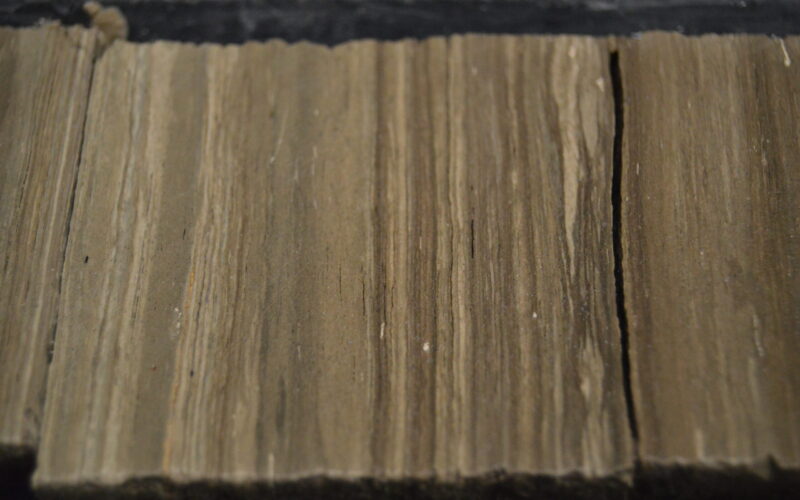
Once again I was talking with Mike Widdowson who was explaining to me the new set of cores now being extracted at our new site and hole. I thought it was interesting because of the wide range of coloration from smooth grey to bubbly and chunky red.
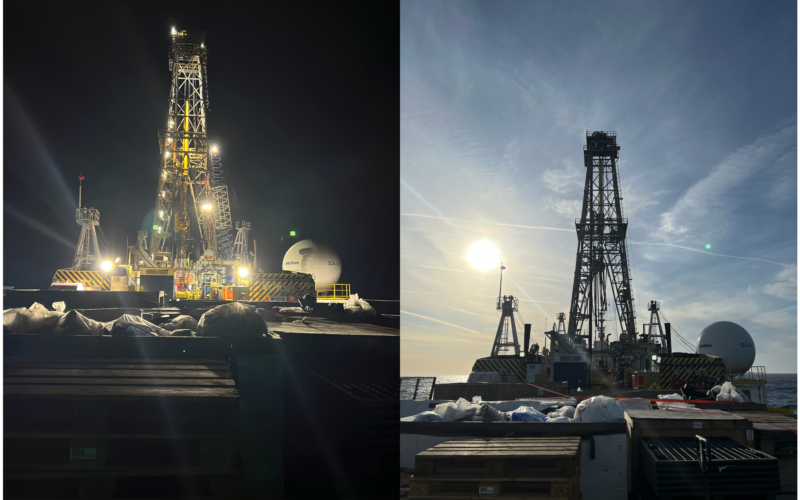
The main purpose during the Shatsky Rise expedition is to determine the age of the rise and to see, if possible, whether the rise fits the plume head hypothesis regarding its formation.
At 12 midnight, under most circumstances, you would think the day is done and everything is winding down, hardly anyone around or doing anything.
We are now half-way through the expedition (6 Oct. 2009, 1 am) at our 3rd site, we are logging and should be done by around sunrise then make our way to site 4. We are watching Supertyphoon Melor but don't think it will affect us in any way. I've learn a lot within this month at sea on the ocean driller JOIDES Resolution.
The Pacific Ocean has seen an active season this year. Two days ago a tsunami hit Samoa and American Samoa after a massive earthquake nearby. There had been a terrible loss of life, my prayers are with those families that have lost relatives as well as loss of property.
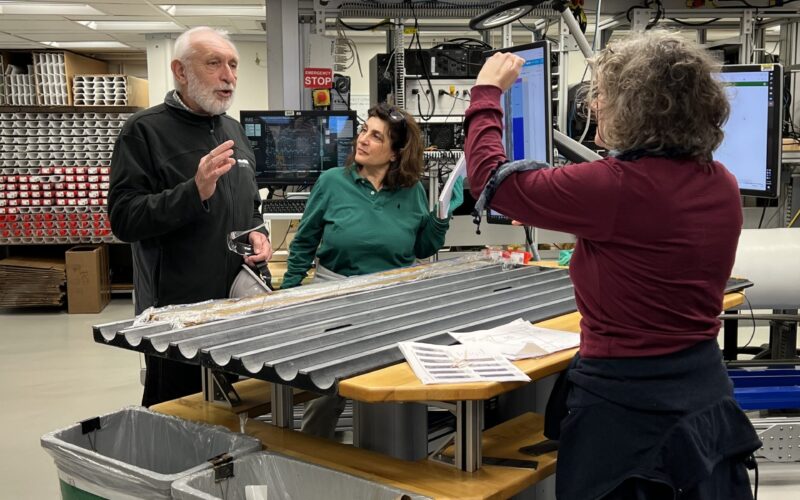
I was talking with Mike Widdowson (pictured here with Anthony Koppers) about the process of interpreting the data from the cores recovered from the drill site. It is not an easy task. One uses the information gathered from a pin hole in the vertical to extrapolate over a landscape (or seascape) in the horizontal, thinking about it again, definitely not an easy task.
Copyright © 2008–2010 Ocean Leadership. All rights reserved. Privacy Policy
site by velocity7.com