The artwork on this poster depicts research on microbe diversity in the deep biosphere. The activity on the back utilizes Lego blocks to model a method microbiologists use, called Fluorescence In-Situ Hybridization (FISH), to “tag,” identify, and study microbial diversity deep below the sea floor.
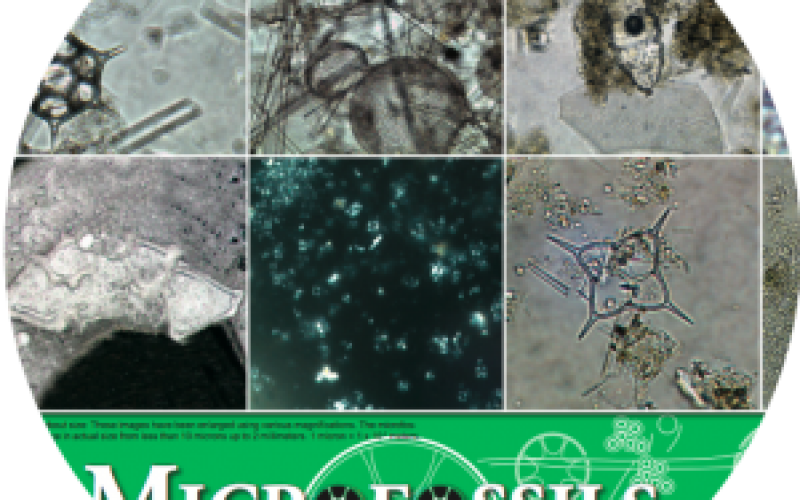
Microfossils are microscopic single-celled organisms that belong to the Kingdom Protista (or Protoctista). Examples include calcareous nannofossils, foraminifera, diatoms, radiolarians, and silicoflagellates; planktonic organisms that inhabit the sunlit surface waters of the world ocean. The tiny shells of microfossils are the sediments that cover vast areas of the seafloor.
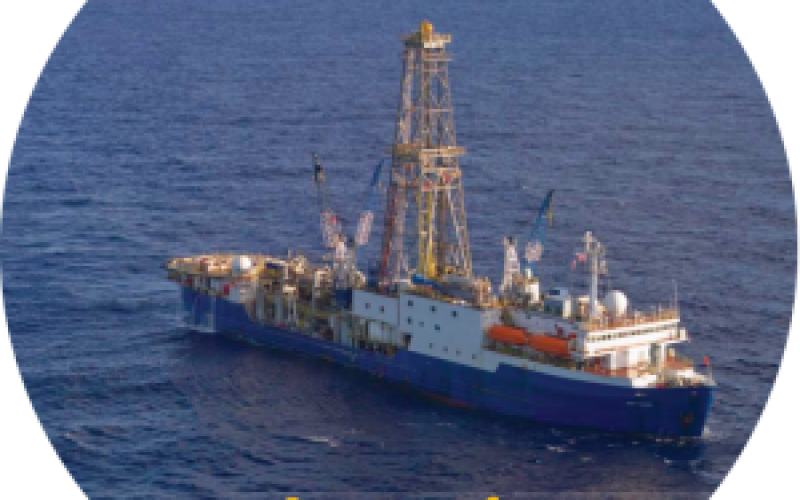
The “Hole” Story About Ocean Cores will introduce your students to core description and curation techniques used by scientists and technicians during Integrated Ocean Drilling Program Expedition 309. Lab groups can work together to examine high resolution photos and data from four cores taken at various depths in this first-of-its-kind complete section of oceanic crust.
Notes:
This activity was written for School of Rock participants and assumes the learners have access to Leg 198 cores at the Gulf Coast Repository. The activity can, however, be useful in your setting through simple modifications and the use of online resources.
The common minerals that make up most of the oceanic crust are called rock-forming minerals. They come from the upper mantle…
Utilizing a series of clathrate structures, the poster reveals new windows of scientific research currently being performed in the complex study of gas hydrates. By visualizing the face of each clathrate structure through an image, the poster simplifies chemical concepts, enabling students to learn
Check out Eons in a Grain for an updated version of this resource!