Using WRMSL Sensors to Unlock Hess Deep’s Secrets
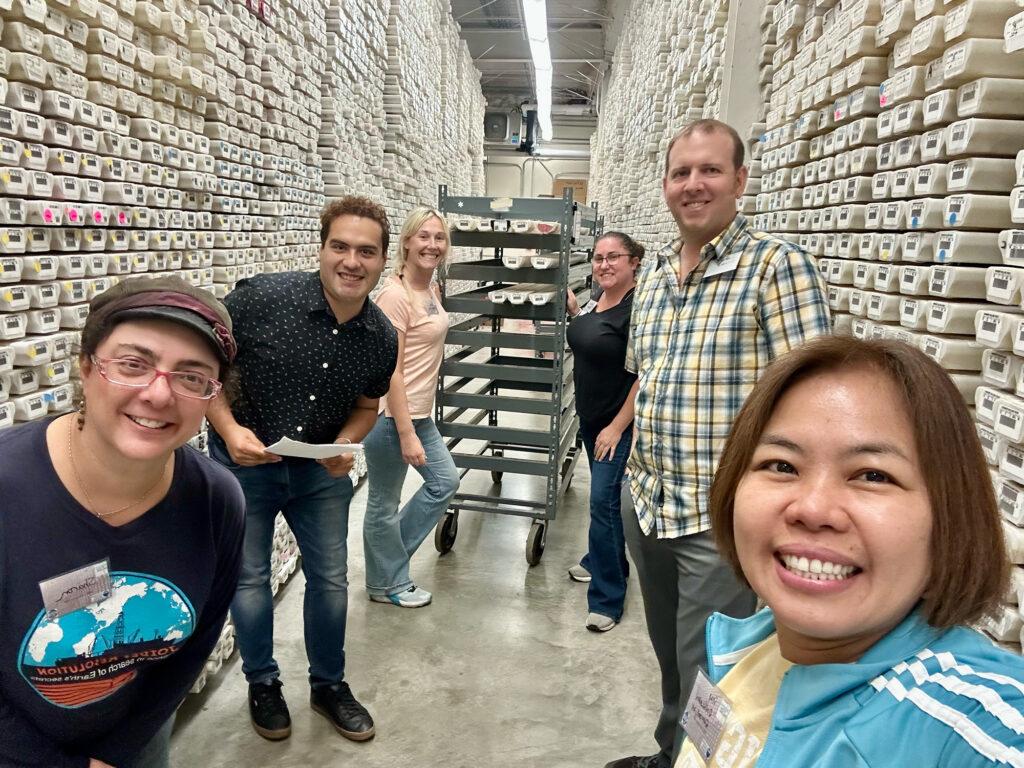
Today was an exciting start for our team under the mentorship of Dr. Jeremy Deans. We officially began working with the samples from the Hess Deep expedition, a rare chance to study mantle rocks that were brought up from deep beneath the ocean floor! Our goal for the week is a bit ambitious since we’ll be looking at over 50 sections of core samples. Every single section has to be handled manually, which means a lot of lifting, careful transport, and precise setup to make sure we protect these valuable pieces of Earth’s history.
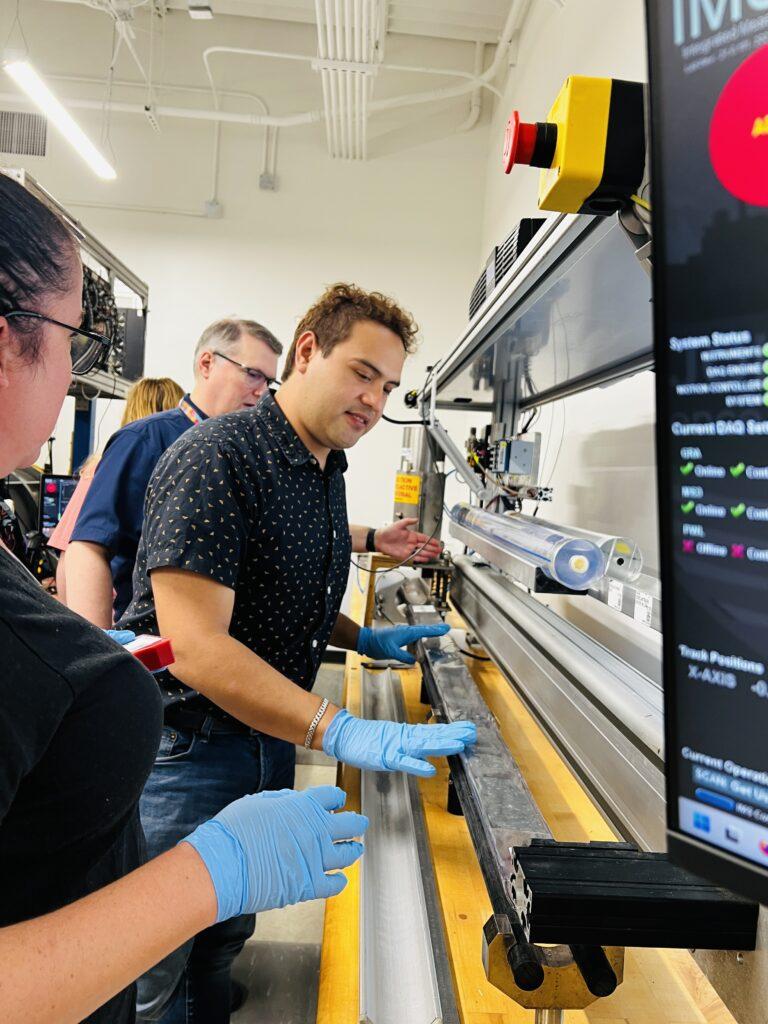
The first step today was using the WRMSL, which stands for Whole-Round Multi-Sensor Logger. This long, track-mounted system lets us run entire, uncut core sections past a series of sensors. Each sensor tells us something different:
- Gamma Ray Attenuation (GRA) Density shows how dense the rock is, which helps us track the amount of serpentinization (how much original peridotite has transformed into serpentine).
- Magnetic Susceptibility measures how magnetic the sample is, giving us clues about the formation of magnetite during high-temperature reactions.
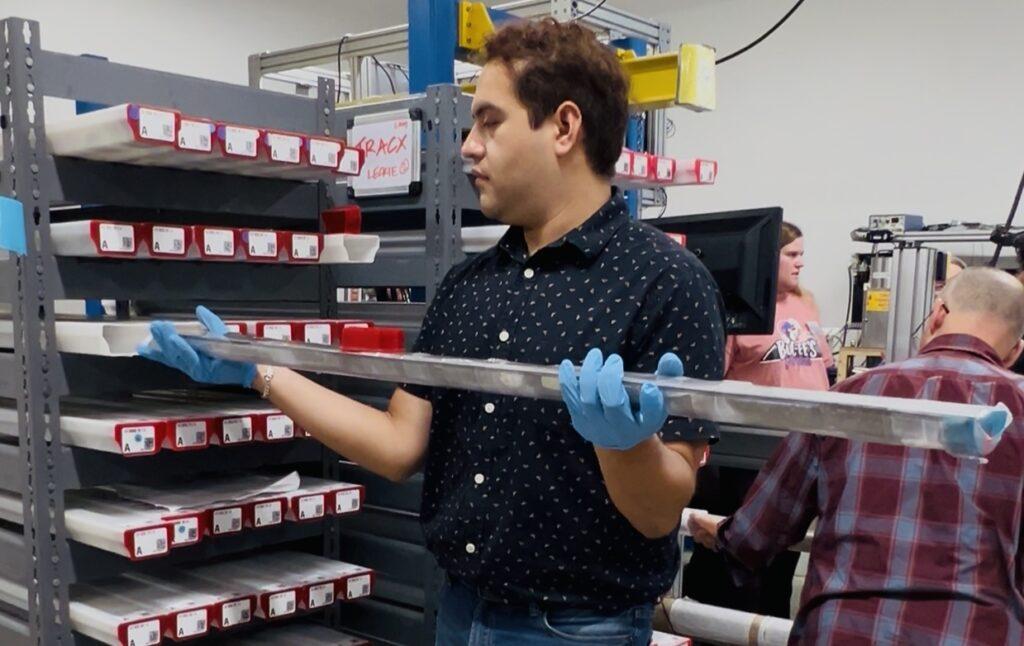
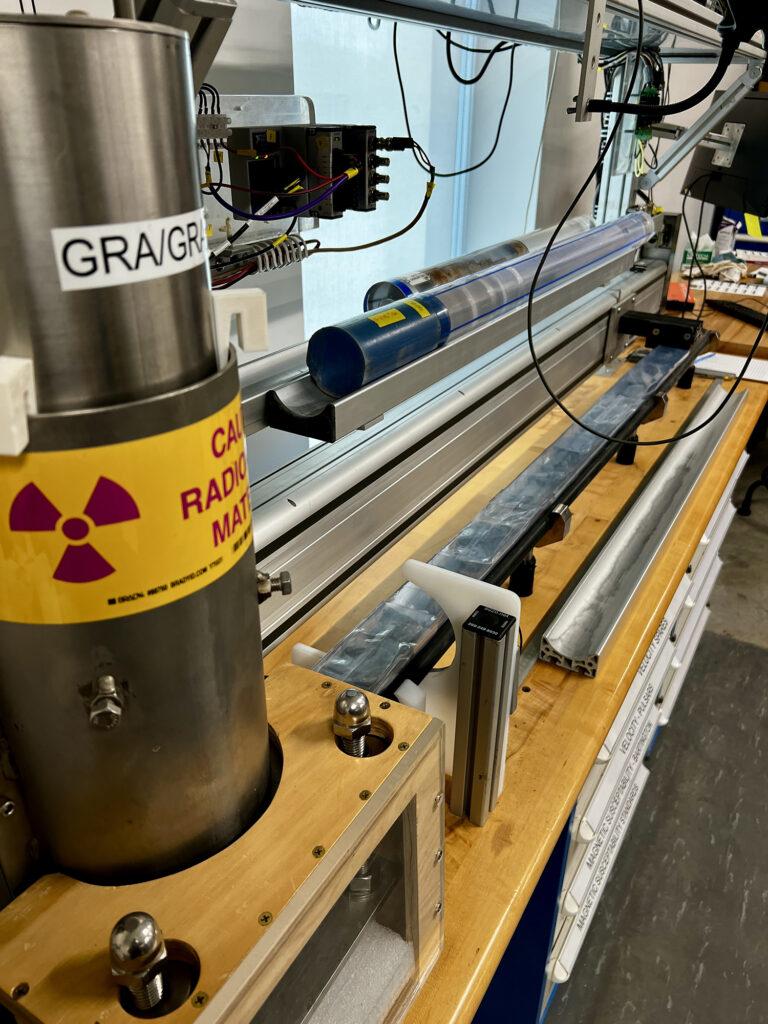 The process today has been very hands-on. We start by retrieving a core section, which is still sealed in its plastic liner from the storage racks. Then, we carefully place it onto the WRMSL track. The machine slowly moves the section under each sensor, logging data continuously along its length. This step is critical because it gives us a profile where we can spot interesting changes in density or magnetism and know exactly where to focus our later, more detailed sampling.
All the measurements are automatically recorded in the lab’s database. By the end of today, we’ll have a complete digital record of density and magnetic susceptibility for each whole-round section we processed. This data will guide the rest of our work, helping us link physical changes in the rocks to the chemical and mineral changes caused by serpentinization.
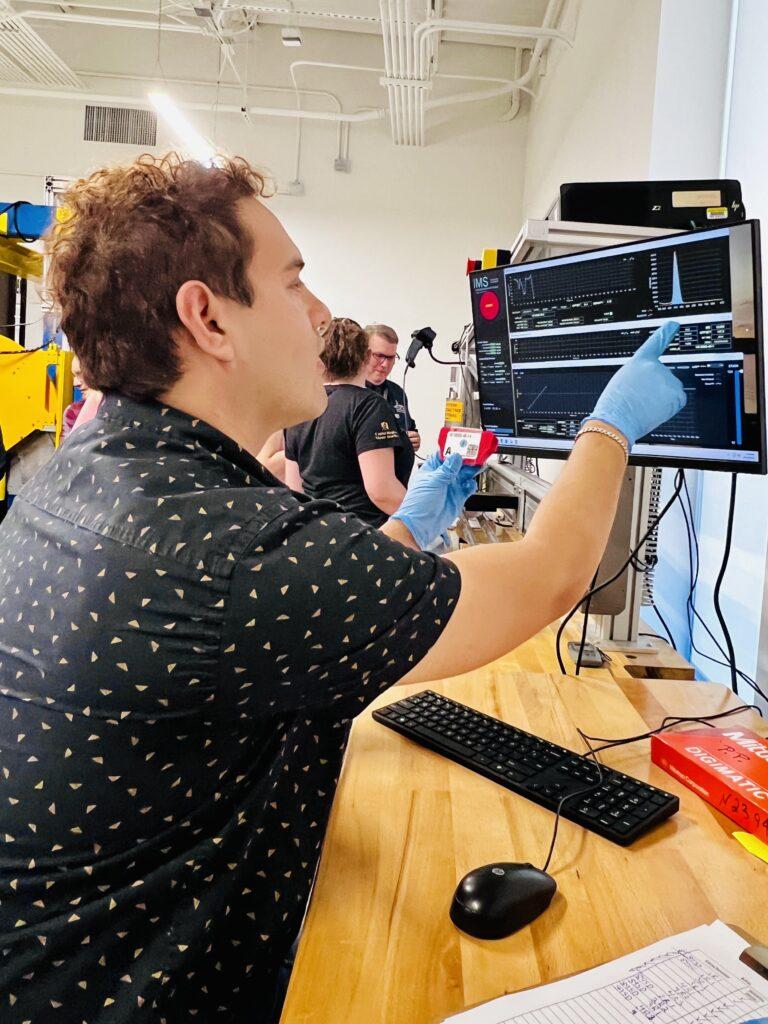 After this step, we will move on to the SHMSL, which is the Section Half Multi-Sensor Logger. This system works on split core halves, which means we’ll get an even closer look at the interior of each sample. SHMSL measurements are important because they can be matched directly with visual descriptions of the core, allowing us to line up the physical data with specific veins, fractures, or color changes we can see with our own eyes.
For me, this isn’t just about collecting data for research. It’s also about imagining how to bring this into the classroom. In an Earth science class, I could use these real measurements and photos of the cores to let students explore the idea that rocks are like historical records since they tell stories of temperature, chemistry, and tectonic processes. Students could plot density changes, identify patterns in magnetic susceptibility, and connect them to real geological events millions of years old. In other words, the work we’re doing here at Hess Deep isn’t just advancing science, it’s building material that can inspire the next generation of Earth scientists.
#NSFfunded
— Alejandro Mundo, New York